


By Aris Barkas/ barkas@eurohoops.net
Things are going to get worse before getting better. It’s not just wishful thinking, but the key takeaway from Lake Como.
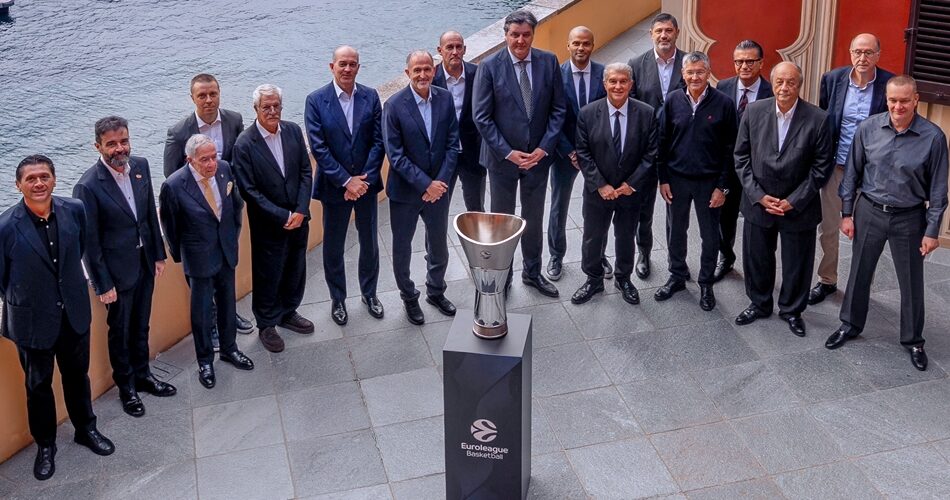
Villa d’Este proved to be magnificent scenery, Leo dell’Orco from the Armani group was a great host, and Olimpia GM Christos Stavropoulos was an impeccable organizer.
EuroLeague wanted to make a demonstration of power, and the setting was ideal.
European basketball is blooming on every level, and the EuroLeague owners, with many of them being present despite rarely doing so on EuroLeague boards, ended up sending a clear message without even including it in the official press release, which confirms the transformation of shareholders into franchises and the upcoming addition of new franchises.
It was certain before the meeting that the NBA offer on the table would not be accepted, and according to everyone involved from the EuroLeague side, it can’t even be considered a starting point for an agreement, even if the numbers remain undisclosed.
It’s also true that the clubs that have submitted bids to become new franchises, with Doncic’s Roma being the latest addition, expected announcements, if not for all eight spots, at least for some of them.
However, the NBA and its European plans, which were not the core of the meeting, ended up being a main topic.
Still, the issue was not the offer on the table but a roadmap for the future.
Control over money
Some EuroLeague clubs from cities that have been publicly named as NBA Europe targets want to keep a line of communication with the NBA. Those clubs are Real Madrid, Fenerbahce Istanbul, Panathinaikos Athens, ASVEL Lyon, and Bayern Munich.
Barcelona and Olimpia Milan, which are also clubs from target cities, were much more reserved, like the rest of the shareholders, and in some cases totally negative.
“We have to show the NBA respect”, was said during the conversation, only for the reply to be, “What kind of respect is the NBA showing us with such an offer?”
While financially the offer was not convincing, as is evident, the elephant in the room is much bigger. The NBA believes in its project and wants full control to accomplish its goals.
This seems to be a very tough pill to swallow for EuroLeague shareholders, who have invested for decades in the sport, and many of them are still losing money, or starting to make a profit in the last few seasons.
However, if not all, most of them know that they own their markets no matter what. It’s not wise to create a basketball team from scratch in Madrid or Munich, thinking that you can build something in the shadow of Real and Bayern.
So how do you value giving up this kind of control, essentially your brand, and what are the guarantees you are getting? And most importantly, do you want to give up this kind of control to someone else?
Two rival leagues
This is a much more complicated case than just a business merger. As former EuroLeague and NBA guard Malcolm Delaney said: “Basketball is a fun sport, but a funny business”.
Maybe a new offer by the NBA will make things simpler, but right now it’s totally uncertain if there will be another offer made.
The NBA is prepared to move forward with their European league, targeting a 2027 tipoff, and Eric Menell, the global co-head of sports at JPMorgan, explained that they are ready.
“I have the highest degree of confidence we will hit $1 billion for franchises in certain markets, a true $1 billion,” he said at Sportico’s Invest London event on Tuesday.
“We have ongoing discussions with a variety of constituents, including global football brands with basketball teams, global football brands without basketball teams, existing EuroLeague teams, and third parties that just want to participate. I have a high degree of confidence that we’re going to hit the benchmarks that we set out.”
The EuroLeague is also moving on with its plan for a 24-team league, starting in 2027. EuroLeague CEO Chus Bueno said many times that fragmentation is not good, but it can be inevitable in the current climate.
And even if the result is two rival leagues, which is far from ideal, nobody can deny that the public interest of the NBA in European basketball has brought money to the table that wasn’t there before. Simply put, if the NBA project was not in the picture, then there might not be two new teams in Rome, or the interest from funds that want to buy or have ownership stakes inside the EuroLeague ecosystem.
Some of the projects that may not end up in the NBA and FIBA competitions may play in the EuroLeague or the EuroCup, and vice versa.
Back in the 2000-01 season, the FIBA-led Suproleague and the EuroLeague were fighting for supremacy, when the financial stakes were much, much lower. In the summer of 2001, the two leagues were merged.
So it has happened before, and in the end, even if it takes more time and even more twists and turns, it will happen again.
Make  Your Preferred Basketball Source.
 Add Eurohoops to Google