


By Eurohoops team / info@eurohoops.net
The Black Eagles return to a competition that has transformed since they left — 20 teams, 38 regular-season rounds, a Play-In Showdown, and a depth of quality that simply did not exist in 2013. The betting market will price them near the bottom of the table, the way it prices every newcomer. But the recent history of EuroLeague debutants suggests the market’s instinct about promoted clubs is far less reliable than it looks, and the two most recent case studies both point in the same surprising direction.
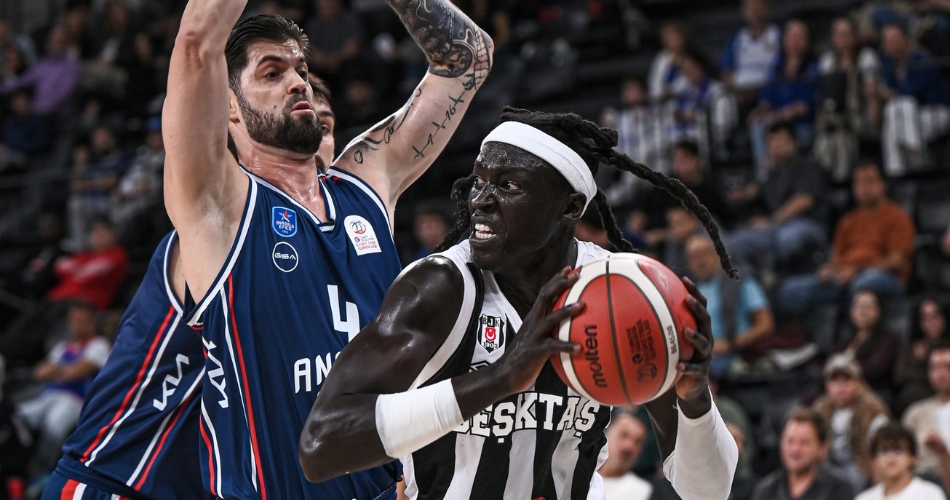
The Team Besiktas Have Actually Built
Start with the bench, because that is where the story starts. Dusan Alimpijevic has been extended until the end of the 2027-28 season, and the numbers behind that decision are remarkable: since taking charge in the summer of 2023, the Serbian coach has led Besiktas to six finals in three seasons – two Turkish League finals, one EuroCup final, two Turkish Cup finals, and a Presidential Cup final, before delivering the EuroLeague qualification that brought the club back to the elite. Whatever happens this season, Besiktas are not improvising. They are extending a project that has been building toward this moment for three years.
The summer recruitment reflects the same intent. Furkan Korkmaz brings Turkish international pedigree and NBA experience. Scottie Wilbekin is one of the most proven guards in EuroLeague history. Metecan Birsen crossed Istanbul to join the project. Eugene Omoruyi arrives directly from a EuroLeague season with Baskonia, where he averaged 10.7 points and 3.7 rebounds in 23 appearances. DaQuan Jeffries and Jaylen Nowell add NBA-tested athleticism, and Mady Sissoko gives the frontcourt a new force at centre. Four key players from the qualification campaign were retained alongside the arrivals.
This is a deliberate blend – EuroLeague-proven role players, NBA experience, and Turkish national team talent, rather than the scattergun approach struggling newcomers usually take. The market will open Besiktas as a bottom-four team by default. The roster suggests the default may be lazy.
The Paris Precedent – When the Market Got a Newcomer Badly Wrong
If you want to know why the newcomer discount deserves scepticism, look at what happened two seasons ago. Paris Basketball entered the 2024-25 EuroLeague through the same route Besiktas have taken – EuroCup qualification and were widely projected as a bottom-tier team in their debut campaign.
What actually happened has become part of recent EuroLeague folklore: Paris won 10 straight games to jump to the top of the standings by Round 12. They started 7-3, sharing second place, and T.J. Shorts went on to win the Play-In MVP award. One of the most successful debuts in the competition’s modern history came from a team the market had priced to struggle.
The mistake the odds made was treating EuroLeague inexperience as the dominant variable. Paris had won the 2023-24 EuroCup with a 22-1 record, sweeping the finals, with Shorts collecting both season MVP and Finals MVP. That was not a team that simply got promoted. It was a team that had outgrown the second tier with a system, a core, and momentum that transferred directly to the higher level.
The market priced Paris on their lack of EuroLeague history. It should have priced them on the quality of what they had built. To be fair, most promoted clubs do finish in the bottom third. Paris was exceptional because their EuroCup dominance was exceptional. But the case proved that the newcomer label, on its own, tells you almost nothing.
Where Besiktas Fit Between the Two Models
And then it happened again. Valencia returned to the EuroLeague for 2025-26 and reached their first-ever Final Four, beating Panathinaikos in a five-game playoff series along the way, with Pedro Martínez collecting Coach of the Year.
Two consecutive seasons have now produced a promoted or returning club that dramatically outperformed its market price. Once is an outlier. Twice is starting to look like a structural pattern, and the structural explanation is straightforward: clubs arriving via the EuroCup route or returning with strong domestic infrastructure bring far more continuity, coaching quality, and system maturity than a “newcomer” price reflects.
So where do Besiktas sit? The case for the Paris model is genuine: elite coach continuity, serious investment, EuroLeague-calibre additions, and an opening-night fixture at home against Valencia that is entirely winnable.
The case for caution is equally genuine. Besiktas did not dominate their route the way Paris did – six finals reached in three years, but most of them lost. Istanbul is also the most demanding basketball city in Europe. The Black Eagles share it with Fenerbahce, champions two seasons ago, and Anadolu Efes, back-to-back champions in 2021 and 2022.
The first Turkish derby, against Efes in Round 7 on October 22, will measure them before autumn is over. A 38-round marathon also tests depth, injury resilience, and travel endurance in ways that domestic cup runs never do.
The honest read is that Besiktas are better than the bottom-four price they will open at, but short of the playoff picture the optimists will paint. Somewhere in the gap between those two positions is where the value lives.
How to Bet a Newcomer’s Season
The practical question is not whether Besiktas can win the EuroLeague — they cannot, and their title price is irrelevant. The value sits in different markets entirely. Season win totals and head-to-head season matchups are where the newcomer discount is most exploitable, because those markets are priced off the same lazy default that undervalued Paris and Valencia.
That is why due diligence matters more than the label attached to a team. Readers consulting UK casino reviews would not assess a platform from its branding alone; they would examine the underlying licence, payment terms, restrictions, and operating record. The same principle applies to a promoted EuroLeague club. “Newcomer” describes Besiktas’ status, but it says little about their actual level. Coaching continuity, retained players, top-level experience, and usable depth provide a much better basis for judging whether the opening number is fair.
Timing matters more than anything. Paris’ 10-game streak came early, before opponents had film on their system. If a newcomer’s approach is going to surprise the league, it usually happens in October and November. By December, the sample has grown, the scouting has caught up, and the odds have corrected.
The bettors who recognised what Paris were in October 2024 found value that had evaporated by Christmas. The same window may exist for Besiktas, and it could be just as short.
Home form is the other early signal. Newcomers with strong home crowds typically over-perform at home and under-perform on the road in their first season, and Istanbul will deliver an atmosphere worthy of the occasion. Early-round home spreads are where the market’s newcomer discount may be most visible.
When Round 7 arrives, treat the Efes derby as the true measuring stick. What Besiktas show against one of the league’s established powers will tell you more than any preseason projection ever could.
Thirteen years is a long time away. But Besiktas are not arriving to make up the numbers. The coach, the roster, and a two-season pattern of newcomers embarrassing their opening odds all point in the same direction.
The market will price Besiktas on where they have been. The smarter approach, as Paris and Valencia have now demonstrated in consecutive seasons, is to price them on what they have built.
Make  Your Preferred Basketball Source.
 Add Eurohoops to Google