


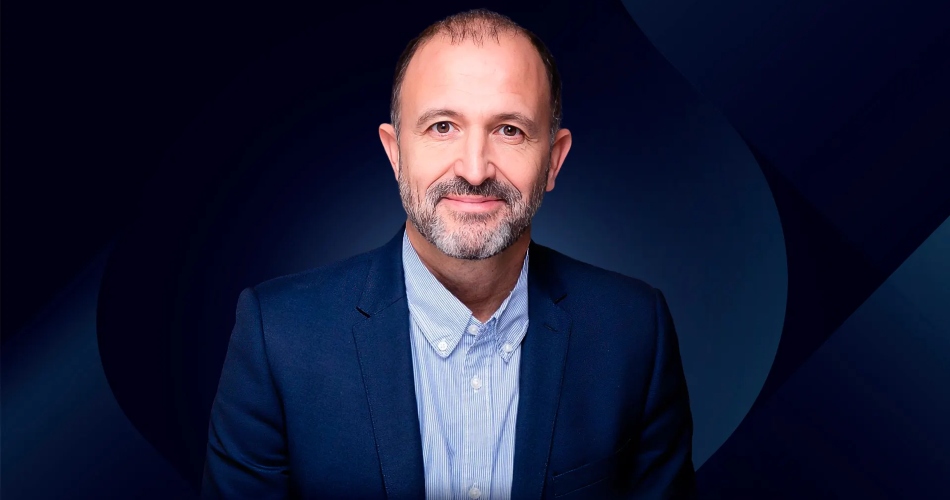
By Johnny Askounis/ info@eurohoops.net
In a comprehensive discussion with La Gazzetta dello Sport, Euroleague Basketball CEO Chus Bueno detailed a transformative roadmap for the sport, centered on a potential multibillion-euro partnership with the NBA to resolve market fragmentation.
Bueno believes the key is to stop diluting value through fractured relationships, schedules, and sponsor interests. “We have to be open-minded,” he noted, highlighting that the rumored five billion euros the NBA could bring to Europe represents an unprecedented investment in the sport. Rather than competing, Bueno suggests the EuroLeague is ready to collaborate once the NBA completes its current fundraising and data review. By sitting down to explore a joint venture, both entities can avoid further market fragmentation and instead create a unified, lucrative ecosystem for European basketball.
Despite its popularity, Bueno admitted that European basketball is currently under-leveraged. “European basketball isn’t monetizing as it should, considering it’s the second-largest sport in Europe with 60-70 million fans,” he emphasized. While the league is the top earner outside the NBA, B2B media trends remain flat. To command higher revenue, Bueno believes the league must penetrate key markets more effectively and refine its “direct relationship with the end user”.
Regarding the stability of the Italian market, the 56-year-old executive dismissed rumors of an exit from Milan: “I don’t see Milan leaving the EuroLeague. It’s a great team with a tremendous tradition, one of the clubs that has been there since the beginning. I came to Milan for the celebration of its 90-year history. But I also don’t see any possibility of any other brand running a major basketball team in Milan other than Olimpia.”
The league’s future structure remains tied to negotiations with giants like Fenerbahce Beko and Real Madrid, both of whom have explored NBA-related alternatives. Bueno remains optimistic about retaining them, stating, “Fenerbahçe has been asking for a new revenue distribution for many years. We are addressing this situation to be more fair to everyone.”
Nostra intervista a Chus Bueno, Ceo di Eurolega, su Nba Europe e le possibili franchigie italiane https://t.co/tV0drGe5Jd
— La Gazzetta dello Sport (@Gazzetta_it) March 29, 2026
The competition format is also approaching a crossroads regarding its grueling schedule, with a critical board meeting set for April 14th. Bueno confirmed considering the current 20-team round-robin against a move to a two-conference system, though such a shift would require expanding the league to at least 22 teams.
“We’re discussing internally whether it makes sense to change the competition format. We’ve seen the impact of a 20-team round-robin format in terms of travel and many weeks with two games. We haven’t decided yet to switch to two conferences. If we do, it’s because we’ll have at least 22 teams. Otherwise, the number of games would be reduced by 25-30%, which would mean risking lower TV revenue. With five or six fewer home games, the clubs would also risk a backlash in ticketing and sponsorships. We’re currently exploring both options, continuing like this for another year or switching to two conferences.”
This structural decision is further complicated by a volatile geopolitical landscape. Bueno reaffirmed a cautious stance on Russia, Israel, and the potential inclusion of Dubai, noting that the league must ‘follow the instructions of European governments and respect diplomatic sanctions’. Regarding the ongoing conflicts, he maintained a day-by-day approach. This uncertainty directly impacts the proposed shift to a two-conference system. “If there’s a risk of the product deteriorating and the geopolitical situation doesn’t recommend it, it doesn’t make sense to increase the number of teams,” he mentioned.
When asked if Euroleague Basketball is interested in expanding to NBA Europe target, Rome, Bueno expressed pragmatic interest tempered by the city’s complex history with sports infrastructure. While acknowledging the Italian capital’s status as a major European market, he emphasized that any potential project would require more than just a famous name. “I look at it case by case,” he explained, noting the league requires “stable ownership” and “solid guarantees” regarding roster investment and facilities.
And then there’s Virtus Bologna with the three-year license signed last year. “I’m not a big fan of the A, B, C, three-year, five-year license system,” he confirmed. “As part of our three-year plan, next season we want to transform the 13 teams with licenses into permanent franchises.”
Speaking of expansion and the potential for a third Italian team, he added: “I’m already in contact with Trento, Venice, and Naples. The answer is very simple: why not? If it makes sense, why not? Italy is a great country, with a rich basketball tradition and good partners.”