


By Aris Barkas/ barkas@eurohoops.net
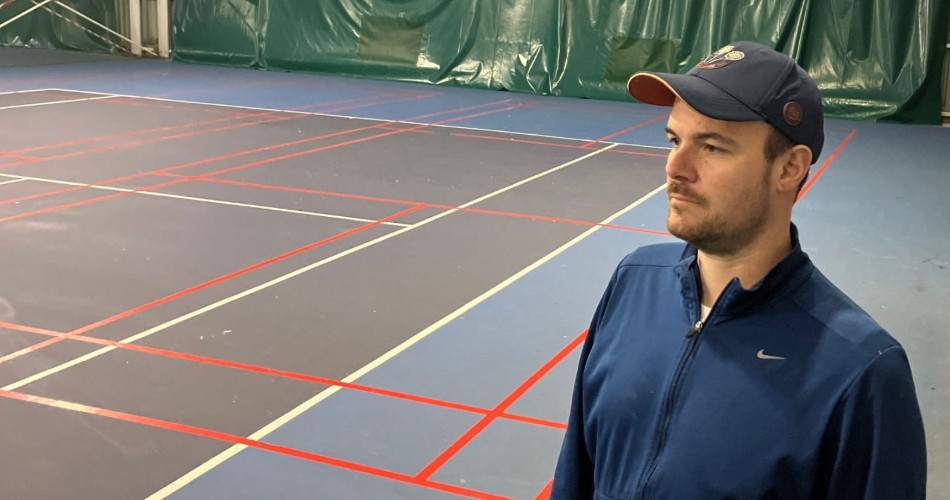
Interesting and revealing answers about psychologists in professional sports were provided by Mark Adamoulas.
Mark has worked in coaching and performance psychology for almost 20 years. After completing his Master’s Degree in Sport and Exercise Psychology, he pursued a doctorate in the field of talent pathways and coach development, with a specific focus on how coaches can implement psychology within their day-to-day practices. Since then, he has worked with organizations like Manchester United, the English Football Association, Red Bull, and with athletes and coaches worldwide, at levels ranging from youth to Olympic gold medalists and world champions.
Scroll down for the Q&A with the experienced coach.
Why are psychologists a must in modern sports?
“If we are talking about the top level of sport, the quality of players has got to a very high level in the past 15 or 20 years. The vast majority are very good technically, have a strong tactical understanding, and especially physically have developed a lot, in terms of speed and strength. But most people will agree, the key differentiator in important moments is the ability to make the right decisions and right executions in these moments, making clutch plays. What separates winning from losing is decision-making, emotional control, confidence, and adaptability under pressure. Psychologists train these capacities deliberately, not by chance.
There are several other reasons I feel psychologists are key to a modern sports organisation. Pressure and attention on athletes have increased exponentially; they are under constant scrutiny to be a certain way. Psychologists help athletes perform with pressure rather than fight it, turning stress into a resource rather than a threat. The schedules in every sport are busier, the games are more intense, and the commitments are more frequent, leading to athletes being repeatedly squeezed. Coaches and other staff have of course felt this squeeze too; with schedules and demands how they are, coaches can no longer be everything for everyone, and certainly benefit from having someone they can confide in and offload to, but also someone who can help them be manage pressure, communicate effectively and consistently, model the behaviours they want in their athletes, and avoid burnout.
Lastly, they work at the system and culture level, not just 1:1, ensuring teams function under stress, not just in ideal conditions. Psychologists can contribute to large organisational decisions, key hires, draft picks, and other areas, so long as there is trust in them to contribute.”
Have you worked with a basketball team, and if not, with which teams or organizations have you cooperated?
“I haven’t worked within a professional basketball team environment, other than at the university level, which is a shame, because basketball was the sport I played until my mid-teens. I have, however, worked with basketball players on a private basis, as individual clients.
I’ve been fortunate to work at a very high level within sports, which was always an ambition of mine. I’ve worked at Manchester United and the English Football Association, both of which were fantastic experiences. I’ve also worked with a couple of segments of the Red Bull organisation, namely F1 and supporting their individual athletes, and being a big F1 fan growing up was a dream come true for me.
Additionally, I’ve collaborated with some significant agencies across a number of sports (football, basketball, tennis) and provided services to their athletes and coaches; yes, coaches sometimes ask for support too. And then there is my private work when I work with individuals who want to develop and improve. I’ve been fortunate to support athletes at various levels, some of which are Olympic gold medalists and world champions.”
Why do you think European basketball clubs are reluctant to adopt the approach of having in-house psychologists?
“I certainly see the reluctance, but I don’t think it’s a single or simple answer. I’ll give you some of the reasons I see. Some of them might be sport-based, some might be culture-based, or down to the person in charge.
Psychology, in some cases, is still seen as fixing a problem, needing support, or being weak. It’s not seen as the cheat-code tool which it can be, when implemented well, in an environment which values it. If you look at the hotbeds of basketball in Europe, it’s traditionally the Balkans and Eastern Europe. Areas and countries which historically have faced hardship, conflict, and society prescribes the need to be strong and show no weakness. So automatically, you’re starting at a disadvantage if you’re trying to convince people to bring someone in – they won’t want their team to be perceived as weak or incapable.
Additionally, clubs will invest a lot of money in facilities, provisions, as well as contracts, and often do not want to spend money on staff or services they don’t think they need. But especially if they are trying to attract players from the US, whether that be the NBA, the G-League, or the NCAA circuit, all of these environments have psychologists actively working in them. So in terms of attracting players, if they come from those environments, they will be used to having the availability of a psychologist to review their games with, talk about development areas with, etc.
Another thing I keep hearing is, it’s a new thing, and decision makers aren’t sure how it’ll work in their environment. It’s not that new… Back in 2000, the Mavericks were the first NBA team to bring in a psychologist full-time, a guy called Don Kalkstein. That’s 25 years ago now. Yet it’s still not seen as the norm. I think some senior stakeholders in organisations have their preconceptions about what psychology is and isn’t, and perhaps aren’t as receptive and open-minded to it. And in some cases, I must say, for good reason, because they might have involved a psychologist previously, it may not have been effective, and they’ve had their fingers burnt a bit. Psychology, unfortunately, doesn’t have as much credit and appreciation as other sciences or professions. If, for example, they had a bad experience with a physio or a trainer, they see it as a bad experience with a physio, not that physiotherapy on the whole is bad or ineffective.
Lastly, I do feel GMs and coaches sometimes can be reluctant to bring someone in and give them control. Head coaches may perceive psychologists as a threat to authority or an additional voice competing for player influence. How comfortable would a coach be knowing that a member of their team knows more about some of their players than they do? Some might be fine, others not. Also, I feel some coaches might have the fear that psychologists would judge them based on their interactions with players. If they are committed enough to put team performance first, and open enough for someone to give them advice on how to work with particular players (again, nobody is perfect!), then it can be a huge gain – but I recognise it’s a courageous step which might be out of some coaches’ comfort zone.
On the whole, I do feel if a club is trusting and committed enough to investing in it properly, it can yield very strong results.”
If there are any kind of mental issues, the psychologist’s intervention is a given. However, how can you help on a day-to-day basis when there are no big or visible issues?
“I would assume most clubs have partnerships with private healthcare providers who handle player and staff medicals, consults, surgeries, etc., and they would be on hand to support any crises and referrals. But like you said, that infrastructure exists. I think perhaps the most common misconception is that the psychologist is there to fix things which are going wrong. I see my role in a sporting environment as 95% proactive. Focused on improvements, growth, development. Positive gains. Not trying to fix problems. Of course, life happens, and maybe 5% of the time, yes, you will have to deal with an unfortunate situation.
But on a day-to-day basis, you’re there to support an environment where everyone can be the best version of themselves. You get to know people. You build relationships. You show that you are respectful and trustworthy, and that people can confide in you. People won’t put their trust in you if they don’t get to know you, or get to know that you care about them first of all as human beings, not as numbers on a roster. The analogy I often give players and staff is to think of me like a wall of safety deposit boxes. Everyone can come to me and talk about stuff, but nobody knows what’s in anyone else’s box – that part is paramount. All these things contribute to what is the ultimate goal for everyone, the team’s success.”
How can you help in cases where there are injuries, and players usually admit that this brings them to a bad place?
“I’d like to start by highlighting that injuries impact players in ways that go far beyond a physiological issue. In terms of some of the longer-term basketball injuries, for example, like an ACL or Achilles injury, players are faced with surgery and then months of rehab to get back on the court. That can put their season, their contract, or even their career in jeopardy, so it can be a particularly distressing time for people.
One of the things I feel we don’t consider as much is the social element. Basketball players are fortunate enough to play a game and earn a living. And that’s the key word, “play”. They don’t get to play when they’re injured; they’re pretty immobile, in a treatment room, pool, weight room, while their friends are all on a court together playing, something which they can no longer do. So there’s a real social pain and feeling of isolation among that.
I find this can be a key time for some good quality work around psychology. Not only to keep the player upbeat and motivated, but also to develop their mental skillset. They have opportunities to learn new skills like visualisation, controlled breathing, and often I’d work in conjunction with the coaching staff and analysts in terms of challenging the player and stimulating them, keeping them focused.
As their physical condition improves, and they are more physically active, but still not involved fully with the team, it can be as simple as keeping them company for tasks. Sitting on bikes side by side or running on the next treadmill, while they’re doing their programmes.
Overall, we’re dealing with human beings, so it’s not a one-size-fits-all approach. On a case-by-case basis, you make yourself available to support each player however they want to be supported.”
If you are part of a club, do you consider yourself a member of the coaching staff?
“Alignment is fundamental when you take a position within an organisation. Especially given what we discussed above, with the scepticism around psychology in a basketball organisation, I would align with the GM and Head Coach in terms of how we collectively see my role, what my remit is, and whether I am considered a part of the coaching staff or not. For me, it depends on a number of things, like the setup of the team, the organisation as a whole, perhaps the country and culture. And as a practitioner, I have to have a degree of flexibility when addressing this. I would start a role with clarity around what I am, what I am there to do, and where I sit in the organisation. I’d certainly look to be wearing a team uniform, be present at training and matches, and have visibility, because that’s how you build rapport and have an impact. People are much less likely to talk to you if you have an office at the end of a corridor and go to work in a suit every day. Additionally, I’m not only there to work with the players; I’m there to support the rest of the staff, too. So, going back to your question, it depends on a lot of things!”
In many cases, players themselves seek help outside the club structure. Do you think this is a problem?
“I feel I’m in a strong position to answer this, because I have experienced both sides of the coin. I have had roles where I am the in-house provider within a club, and where I have collaborated with agencies, who have approached me to work with their players away from the club. I wouldn’t call it a problem as such, but I think it certainly highlights an interesting situation.
Clearly, for the players to be seeking something away from the club, they have some needs which aren’t being met. Maybe they don’t feel safe or trusting of the people in the club, maybe the club isn’t able to support them in this way because they haven’t invested in a psychologist in-house, or maybe it’s something completely different. I’m experienced enough to know not to judge a player if they want to seek advice and develop away from their club setting, because it’s a personal thing.
On the whole, I definitely feel that if clubs had a psychologist and other specialists engaged within the club on a daily basis, and a system which made every player feel like they were getting the best service available, I feel most players would be content and not seek things elsewhere.”
What would be for you the ideal structure that can help a club or an organization take full advantage of what a psychologist can offer?
“First of all, like I mentioned before, having clarity around what they want to use a psychologist for. Some clubs will want to focus solely on players, some will want to use them as an extra voice in the coaching group, some will want them involved with the GM and HC in terms of recruitment and retention, some will want the whole lot. Being open-minded and not too fixated or preconceived about what they think a psychologist should and shouldn’t do will create a strong foundation for the role and person to flourish. In an ideal world, the psychologist will be a person who observes and gives feedback on the day-to-day happenings within the club, and views the world through a lens which has continuous development and team performance at the centre. After all, the resources which will yield results for the team are human beings, so creating and fostering an environment which brings out the best in themselves, and allows the team to thrive as a collective unit is surely something a HC or GM would aspire towards.”