


By Nikola Miloradović / info@eurohoops.net
There is no Olympic tournament this summer, no men’s EuroBasket and no World Cup. But if the upcoming European qualifying window is any indication, international basketball hardly needs a major championship to attract some of its biggest names.
With NBA players available during the offseason, national teams across the continent have assembled impressive rosters ahead of the next step on the road to Qatar 2027. From established superstars and reigning world and European champions Germany to emerging contenders chasing history, the August window has all the ingredients for something considerably bigger than a routine round of qualifiers.
The stakes are substantial. Twenty-four teams remain in contention, divided into four groups of six, with results from the first round carried forward. Only the top three from each group will qualify for the World Cup, leaving little margin for error when games resume between August 27 and 31.
Watch All FIBA World Cup Qualifiers Windows action on Courtside 1891
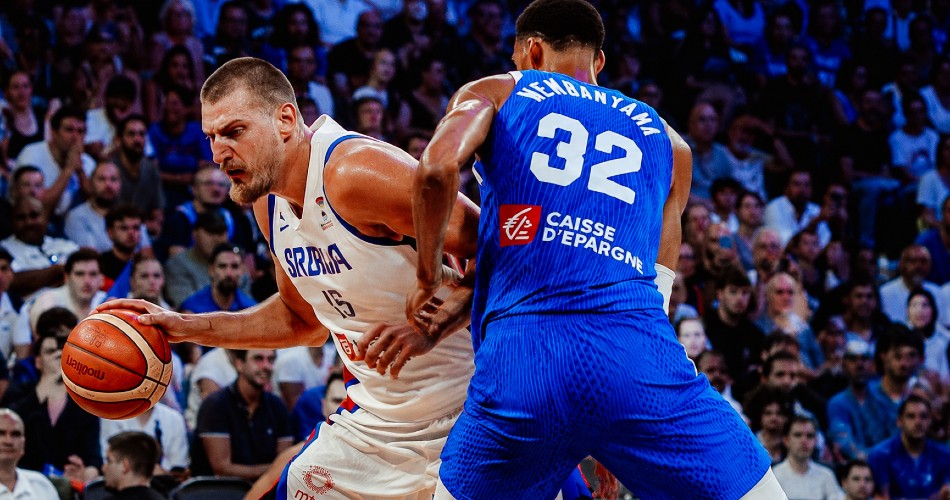
The preparations have already delivered a taste of what is coming. Victor Wembanyama and Nikola Jokic went head-to-head twice, Germany claimed the DBB Supercup behind Dennis Schroder, while Lauri Markkanen and Simone Fontecchio warmed up with strong performances.
Here are 10 players who could define the upcoming European qualifying window.
Victor Wembanyama — France (5-1 record in Group L)
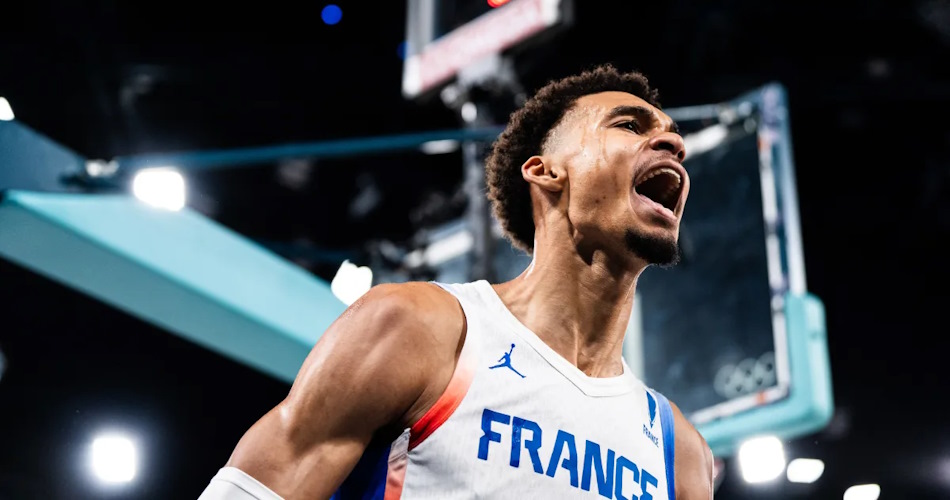
The biggest attraction in European basketball this August might also be its most intimidating defensive presence. Wembanyama returns to France as the national team’s new captain after a spectacular season with the San Antonio Spurs, averaging 25.0 points and 11.5 rebounds while becoming the youngest and first unanimous NBA Defensive Player of the Year.
France already owns a strong 5-1 record in Group L, but having its generational centerpiece back gives the entire campaign a different complexion.
The buildup has already provided two fascinating encounters with Jokic. Wembanyama scored 10 points in France’s 90-87 defeat in Belgrade before responding with 18 in a 91-90 victory in Orléans, decided by Jaylen Hoard’s buzzer-beater.
Now comes the real assignment: Slovenia on August 27 in Paris and Sweden on August 30 in Stockholm. With Rudy Gobert alongside him, France can deploy a frontcourt featuring five NBA Defensive Player of the Year awards between them.
Nikola Jokic — Serbia (4-2 record in Group J)
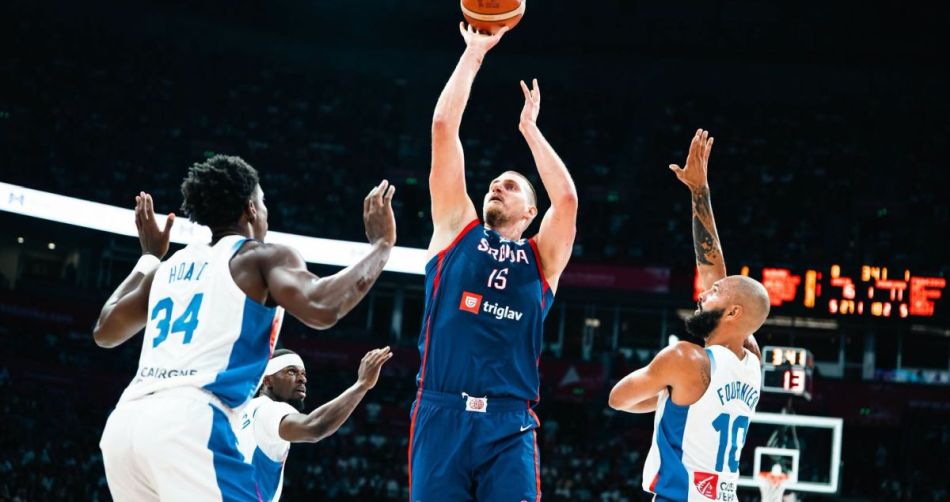
Few players can make a World Cup qualifier feel like a major international event simply by stepping onto the court. Jokic is one of them.
The Denver Nuggets superstar and three-time NBA MVP averaged 27.7 points, 12.9 rebounds and 10.7 assists last season, becoming the first player in NBA history to lead the league in both rebounds and assists per game. For Serbia, his presence changes everything: the spacing, the passing angles, the tempo and the expectations.
His two preparation games against Wembanyama offered a reminder of how easily he can control proceedings. Jokic finished with 20 points, nine rebounds and eight assists in Serbia’s victory in Belgrade, then delivered 34 points, 13 rebounds and five assists in the narrow defeat in France.
He had already produced a 20-point, 10-rebound, 11-assist triple-double against Bosnia and Herzegovina during the previous qualifying window. Serbia enters Group J at 4-2, facing Iceland at home on August 28 before a potentially decisive trip to Italy on August 31.
Lauri Markkanen — Finland (4-2 record in Group L)
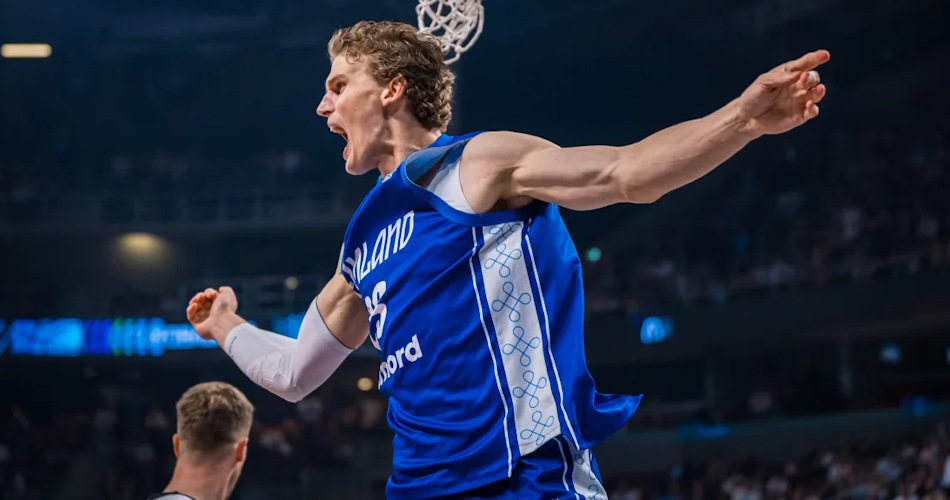
Finland’s rise has been built around a clear principle: when Markkanen is available, the team has a player capable of changing the balance against almost anyone. The Utah Jazz forward averaged 26.7 points and 6.9 rebounds last season in the NBA, and his combination of size, mobility and shooting makes him an exceptionally difficult matchup under FIBA rules.
He looked ready in Finland’s final preparation game, recording 17 points, six rebounds, three assists and three steals in a 93-78 victory over Iceland. That performance followed a EuroBasket 2025 campaign in which he averaged 23.1 points and 8.1 rebounds as Finland achieved a historic fourth-place finish. With Finland carrying a 4-2 record into Group L, Markkanen will be central to a Nordic showdown against Sweden on August 27 in Helsinki and a visit to Estonia three days later.
Dennis Schroder — Germany (5-1 record in Group K)

NBA teams may change, but Schroder’s importance to Germany never does. Now with the Charlotte Hornets following his move from Cleveland, the veteran point guard remains the unmistakable heartbeat of a national team that holds both the world and European titles. He was named MVP when Germany won the 2023 World Cup and again when it captured EuroBasket 2025, underlining just how closely the country’s golden era is tied to his leadership.
Germany’s recent DBB Supercup triumph in Hamburg suggested that little has changed. Schroder posted 17 points and 10 assists against the Czech Republic before contributing 10 points, 10 assists, seven rebounds and three steals in the 96-87 final victory over Croatia, including an important late three-pointer. Germany begins Group K at 5-1, hosting the Netherlands on August 27 before facing unbeaten Poland away on August 30. For the reigning champions, that second game could provide an early indication of who controls the group.
Neemias Queta — Portugal (3-3 record in Group I)
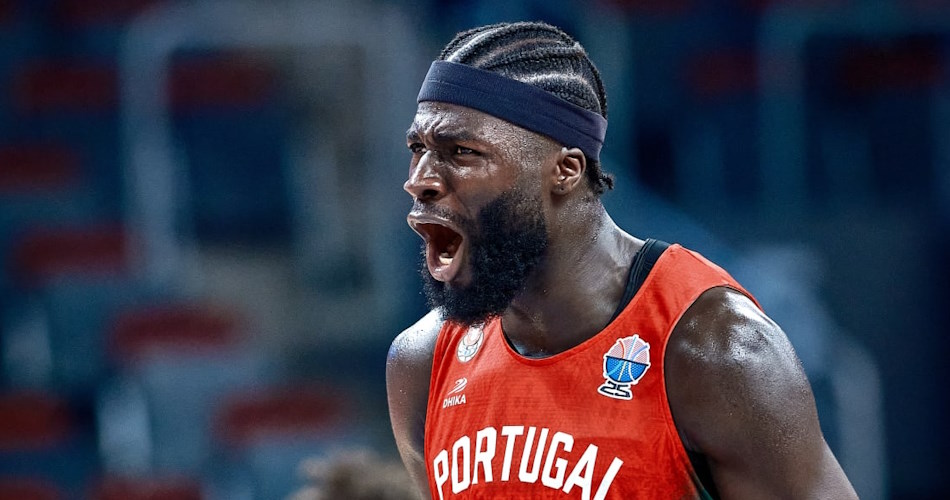
Some players enter these qualifiers hoping to protect their country’s established place among the international elite. Queta is trying to take Portugal somewhere it has never been. The Boston Celtics center has emerged as the face of a national team chasing its first World Cup appearance, bringing NBA-level size, rim protection and rebounding to a country that has become increasingly competitive on the European stage.
Queta started 75 games for Boston last season, averaging career-highs of 10.2 points and 8.4 rebounds before signing a contract extension with the Celtics. He also averaged 15.5 points and 8.0 rebounds at EuroBasket 2025 as Portugal reached the round of 16. Now, with Portugal entering Group I at 3-3, he faces a major test away to Spain on August 28 before a potentially crucial home game against Georgia on August 31. If Portugal is going to turn qualification into a genuine possibility, its NBA center will almost certainly be at the center of it.
Simone Fontecchio — Italy (5-1 record in Group J)

Fontecchio has a habit of becoming a different kind of player when he puts on the Italy jersey. The Miami Heat forward averaged 8.5 points in the NBA last season, but with the national team he is often the primary scorer, the most reliable shot creator and the player most capable of taking over when the offense needs direction.
He reminded everyone of that role during Italy’s 83-61 preparation victory over Estonia, scoring 21 points on 7-of-15 shooting, including four three-pointers, and earning MVP honors. The upcoming schedule only adds to the intrigue: Italy visits Bosnia and Herzegovina on August 28 before hosting Serbia on August 31.
Fontecchio scored an Italian EuroBasket-record 39 points against Bosnia last year and produced 30 against Serbia during Italy’s victory at the 2023 World Cup. With Italy entering Group J at 5-1, both opponents already know exactly how dangerous he can be.
Jusuf Nurkic — Bosnia and Herzegovina (2-4 record in Group J)
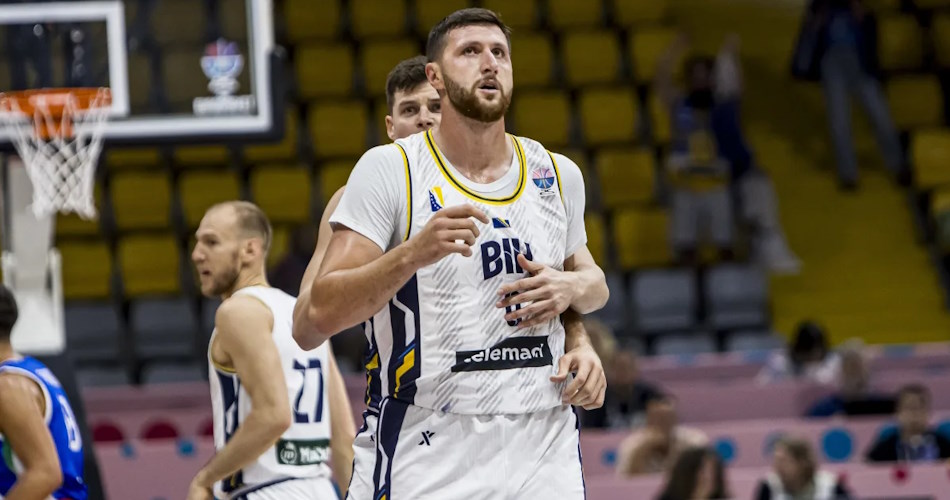
While some teams approach the August window from positions of relative comfort, Bosnia and Herzegovina has no such luxury. It enters Group J at 2-4, behind Italy, Serbia, Lithuania and Iceland, with very little room to recover from another setback. That makes Nurkic’s presence more than a welcome addition: it represents one of the clearest reasons to believe Bosnia can still fight its way back into contention.
The Utah Jazz center recently returned to the franchise on a new two-year contract after averaging 10.9 points, 10.2 rebounds and 4.8 assists last season. His passing, rebounding and physicality provide Bosnia with an interior foundation against two difficult opponents: Italy at home on August 28 and Lithuania away on August 31. Nurkic averaged 17.0 points and 8.7 rebounds at EuroBasket 2025, and Bosnia may need something close to that production again if it wants to keep its World Cup ambitions alive.
Pelle Larsson — Sweden (3-3 record in Group L)
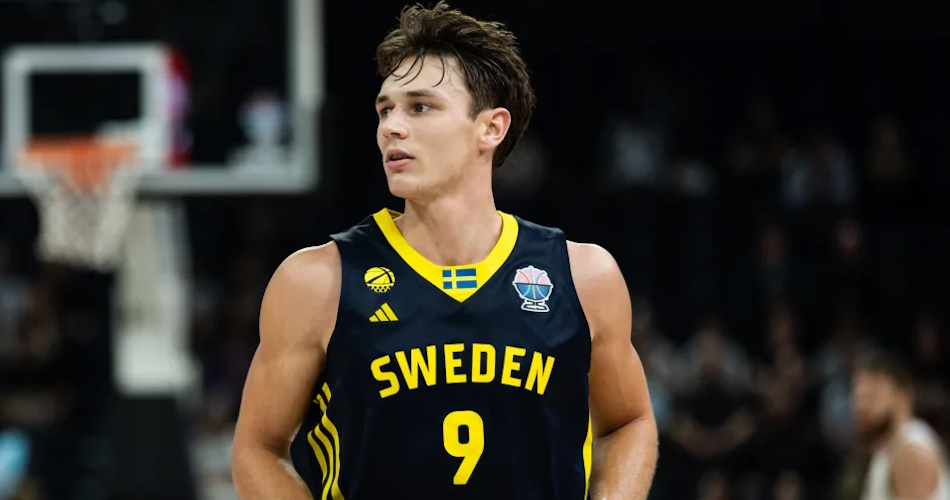
Larsson might not carry the same international profile as some of the other names on this list, but few players arrive with more direct evidence of how much they can change their national team’s fortunes. Sweden began its qualifying campaign 0-3 before recovering to 3-3, with the Miami Heat guard playing a decisive role in that turnaround.
He scored 19 points against the Czech Republic and followed that with 31 in a crucial victory over Slovenia, averaging 25.0 points across those two qualifying appearances. His NBA development has been equally encouraging: Larsson averaged 11.4 points, 3.5 rebounds and 3.4 assists across 70 games for Miami last season, starting 54 of them.
Sweden now faces Markkanen’s Finland on August 27 before hosting a France team featuring Wembanyama and Gobert on August 30. Demand for the France game was so strong that it was moved to Stockholm’s larger Avicii Arena.
Rudy Gobert — France (5-1 record in Group L)

Wembanyama may command most of the attention, but France’s defensive identity becomes even more imposing when Gobert is standing beside him. The Minnesota Timberwolves center is a four-time NBA Defensive Player of the Year, tied for the most in league history, and remains one of the most influential interior defenders of his generation.
Gobert averaged 10.9 points and 11.5 rebounds for Minnesota last season, while his return to international action gives France an experienced anchor alongside its new captain. He also made important fourth-quarter contributions in the preparation victory over Serbia, helping France withstand Jokic’s late push.
Against Slovenia on August 27 and Sweden on August 30, the combination of Gobert’s defensive positioning and Wembanyama’s extraordinary reach could make France’s frontcourt the defining matchup problem of the entire window.
Nikola Jovic — Serbia (4-2 record in Group J)
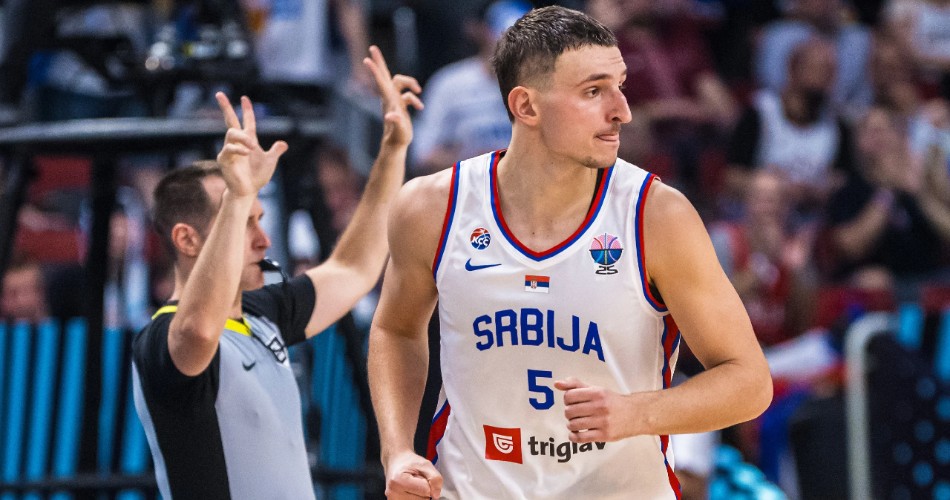
It would be easy to describe Jovic simply as the other Nikola on Serbia’s roster. His recent national-team performances suggest that would be a serious mistake. The Miami Heat forward averaged 7.3 points, 3.3 rebounds and 2.2 assists in the NBA last season, but his responsibilities expand considerably when he joins Serbia, where his shooting, ballhandling and versatility make him an ideal complement to Jokic.
During the July qualifying window, Jovic averaged 27.0 points and produced one of the standout performances of the entire campaign against Bosnia and Herzegovina: 32 points, seven three-pointers and three blocks in a 94-81 victory, while Jokic recorded a triple-double. He also helped spark Serbia’s late comeback against France in Orléans with two fourth-quarter three-pointers.
Iceland awaits on August 28, followed by the trip to Italy on August 31, where Jovic could find himself facing Miami teammate Fontecchio in one of the window’s most compelling games.
Make  Your Preferred Basketball Source.
 Add Eurohoops to Google