


By Matevz Zupancic/ info@eurohoops.net
A few weeks ago, I wrote about the identity crisis of European basketball, addressing the fragmentation of competitions, the rivalry between EuroLeague and FIBA, the uncertainty surrounding NBA Europe, the growing influence of NCAA money and the possible gradual comeback of domestic championships. My central argument was that European basketball has developed into an increasingly complicated product, difficult for fans to follow, clubs to sustain, supporters to embrace and investors to understand — let alone invest in.
Recent developments have prompted me to write a sequel. Another dimension of this crisis has erupted, one that goes beyond commercial structures and institutional rivalries: the integrity and credibility of the competitions themselves. But has it been there all along, hidden from view, or have we simply been in denial?
The latest corruption investigation in Greece, together with a series of match-fixing and illegal betting scandals across Europe, raises an uncomfortable question. While basketball’s institutions have spent years competing for influence, commercial rights and control of competitions, have they paid sufficient attention to protecting the game itself?
Greece: When allegations reach the institutions
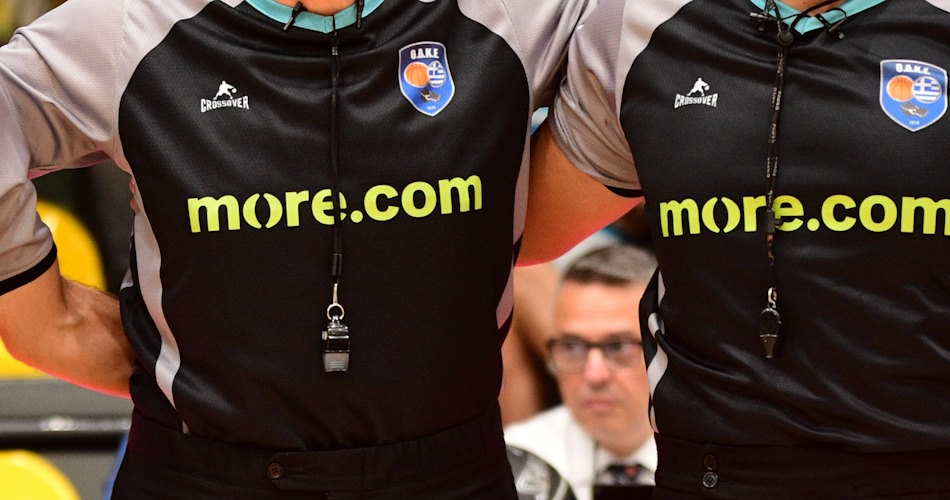
The investigation unfolding in Greece in October 2026 is particularly concerning because of the positions held by some of those implicated. Greek authorities have reportedly arrested six individuals, including federation president, refereeing officials, current and former referees, and a businessman, as part of an investigation into alleged bribery and match manipulation.
Investigators are examining approximately 50 games played between 2016 and 2026, ranging from professional competitions to youth basketball (!). Reports indicate that police seized more than €920,000 in cash, while allegations include payments to referees and interference with officiating decisions. And this is only the tangible evidence that the authorities have made public. It may well be just the tip of the iceberg.
The investigation remains ongoing, and the allegations have not been established in court, so let us not jump to conclusions too quickly. Nevertheless, the potential involvement of individuals entrusted with administering and regulating basketball makes the case especially serious. If proven, this would represent more than individual misconduct. It would point to weaknesses within the institutional mechanisms designed to guarantee fair competition.
A decade of warning signs across Europe
The Greek investigation is not an isolated development. European basketball has experienced a series of integrity-related scandals involving players, referees and other basketball officials. Several have resulted in criminal proceedings or disciplinary sanctions by FIBA.
Just some of the more notable cases:
- Austria (2018–2020): Criminal proceedings exposed organised betting fraud involving professional basketball players and the manipulation of results for financial gain. The investigations revealed vulnerabilities in smaller professional competitions, where financial instability can increase exposure to external influence.
- Serbia (2023–2025): FIBA imposed lifetime bans on several players for betting and match-manipulation violations. Other individuals received lengthy suspensions for integrity-related offences. Serbian authorities also investigated suspected organised match-fixing in domestic competitions.
- To add another dimension, in Slovenia (2024): An experienced EuroLeague referee was suspended for the 2024–25 season following a theft incident at Belgrade airport involving perfume worth approximately €220. Although unrelated to betting or match manipulation, the case raised broader questions about professional conduct and the accountability of elite officials.
- Greece (2026): The current investigation into alleged bribery, manipulation of officiating and institutional involvement represents a potentially significant escalation, although criminal responsibility remains to be determined.
These cases differ considerably in their legal and disciplinary circumstances. Illegal betting, sharing inside information, failure to report suspicious approaches and deliberate match manipulation are distinct violations. Nevertheless, their recurrence across different countries and levels of competition suggests that integrity risks deserve far greater attention within European basketball’s governance debate and represent yet another challenge for anyone seeking to reorganise European club basketball.
Fragmentation and the problem of accountability
European basketball certainly does not lack governing bodies. National federations, domestic leagues, EuroLeague, FIBA and regional competitions operate within overlapping regulatory and commercial frameworks, often pursuing different institutional interests.
The existence of multiple authorities, however, does not necessarily produce effective governance. Fragmentation can generate inconsistent standards, unclear responsibilities and insufficient coordination between organisations responsible for protecting competition integrity.
This does not establish a direct causal relationship between the fragmented European basketball landscape and corruption. Match-fixing exists in many sports and organisational systems. Nevertheless, fragmented governance can make prevention, detection and enforcement more complicated, particularly where institutional independence and transparency are already limited.
Smaller domestic competitions may be especially vulnerable. Financially unstable clubs, modest player salaries, limited administrative resources and insufficient monitoring mechanisms can create conditions in which manipulation becomes more difficult to detect and prevent.
Meanwhile, European basketball continues to devote enormous political and commercial energy to questions of licences, competition formats, market access and television rights. We have spent years debating who should control European basketball, while perhaps paying too little attention to who is responsible for protecting its credibility.
Has basketball become disconnected from its foundations?
There is a growing sense that European basketball is gradually distancing itself from the communities and institutions that originally built its identity.
Domestic clubs, local rivalries, youth development systems and national championships have historically formed the foundation of European basketball culture. Yet these elements increasingly compete for attention and resources within a crowded international calendar dominated by commercial and institutional priorities.
There is no doubt that basketball needs investment, stronger business models and more attractive competitions. The problem arises when commercial ambitions are pursued without an equally strong commitment to sporting integrity, institutional accountability and the long-term sustainability of the basketball ecosystem. For supporters, the credibility of competition remains fundamental. Questionable refereeing decisions are part of professional sport. The possibility that sporting outcomes could be deliberately influenced by betting interests or compromised officials is an entirely different matter.
Once confidence in the fairness of competition begins to erode, the consequences extend far beyond individual games. They affect the reputation of leagues, the willingness of sponsors to invest and, ultimately, the emotional connection between supporters and their clubs.
A reminder: Several European competitions and clubs are sponsored by betting and gambling companies, and some even carry their names. These companies invest enormous sums in marketing, partly to promote a sense of social responsibility and counter the reputational concerns associated with their industry. Even if entirely uninvolved in such cases, they may suffer reputational damage and become less willing to invest in sponsorships — something basketball can ill afford at the moment. The ethics of these partnerships, however, deserve a separate debate.
Another challenge for NBA Europe and the future European model
The potential arrival of NBA Europe is frequently discussed in terms of commercial opportunity, new investors, stronger brands and access to major European markets. However, any organisation attempting to create a more unified European basketball structure will encounter challenges that cannot be solved through financial investment or competition design alone.
Even the NBA, operating under a single governing structure, has not been immune to betting scandals, as demonstrated by the lifetime ban of individuals; this illustrates how difficult it is to safeguard sporting integrity and how much greater the challenge may be for NBA Europe, operating across multiple jurisdictions, legal systems and basketball cultures.
A new competition does not automatically create a better system. Nor would replacing one governing organisation with another necessarily resolve the underlying weaknesses.
Stronger cooperation with law enforcement and effective mechanisms for reporting and investigating misconduct will become essential. Much as WADA has done in the fight against doping, FIBA (or whichever body ultimately oversees the system) should build a clear framework for detecting violations and imposing sanctions. Steps are already being taken in that direction, but a more comprehensive system of accountability is needed.
Above all, it needs a coherent structure in which domestic championships are recognised as essential components of the European basketball ecosystem rather than obstacles to international commercial expansion. These smaller entities must not be forgotten by their governing bodies. They will need practical tools and resources to minimise such misconduct at grassroots level through effective monitoring systems and education. Weakening them further would undermine the very foundation that any future European basketball project needs.
Giving basketball back to its supporters
European basketball possesses extraordinary sporting traditions, strong development systems, historic rivalries and a passionate audience. These are assets that cannot simply be replicated through commercial investment. Repeated integrity scandals now add another serious challenge to the credibility of the European basketball product.
The debate surrounding EuroLeague, FIBA and NBA Europe should therefore extend beyond commercial rights, permanent licences and market potential. It should also address the fundamental responsibility of every sporting institution: ensuring that competitions are fair, transparent and worthy of public trust.
Whoever eventually succeeds in bringing European club basketball closer together will face a challenge considerably greater than aligning calendars and commercial interests. They will also need to restore confidence in the system and reconnect the sport with its foundations and values.
Because ultimately, the future of European basketball should not be decided exclusively by institutions competing over who gets the most views on TikTok, but also by the supporters who give it meaning, cheer for genuine victories and mourn genuine defeats. Otherise why even keep score.
- Matevž Zupančič holds a Master’s degree in Sports Management and has been working in professional basketball since 2005. He began his career with Olimpija Ljubljana, where he held various roles related to the senior team before serving as the club’s General Manager from 2013 to 2017. During this period, he represented the club within major international basketball organizations and competitions, including the EuroLeague, EuroCup, and ABA League. In 2017, he joined Kansai Helios Domžale as General Manager. Zupančič also serves as President of the Slovenian First Division Clubs Association and as a member of the Executive Board of the Basketball Federation of Slovenia. In addition, he is involved in several advisory and consulting projects through his basketball consultancy, Blueprint Management (www.blueprintmgt.net). His key strength is an extensive understanding of the European basketball ecosystem, built through more than two decades of hands-on experience across club management, international competitions, and basketball governance.
Make  Your Preferred Basketball Source.
 Add Eurohoops to Google