


By Semih Tuna/ info@eurohoops.net
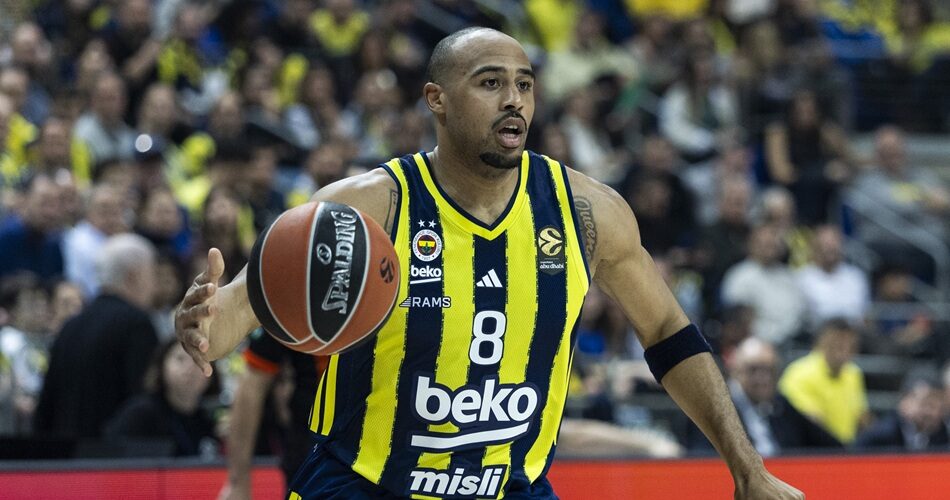
Talen Horton-Tucker discussed adjusting to European basketball and the demands of defending EuroLeague champion Fenerbahce Beko, playing for head coach Sarunas Jasikevicius, and previously winning an NBA championship alongside LeBron James, among other topics.
Scroll down for the Q&A with Eurohoops, followed by the respective video.
How has living in Istanbul and adapting to daily life in Turkey been for you, and do you think that off-court adaptation has also affected your on-court performance?
Yeah, I feel like it all ties in together. Just adapting on the court is important, but as much as it matters that you adapt on the court, you gotta adapt off the court as well. So it has been challenging. Parts of the story were just being able to come over at first, and not being used to the time, and dealing with the different time zone changes and things like that. It was very challenging at first, but as time went on, it’s gotten a lot better. Just continuing to learn and be over here more and more is something that’s been helping me.
You have now experienced the differences between European basketball and the NBA. What has been the most surprising or challenging difference for you so far?
I wouldn’t say I was too surprised, but the most challenging part is understanding the tactical part of the basketball game over here in Europe. It’s tactical in the NBA also, but totally different, so I would encourage players to focus and lock in to understand the tactical side.
Fenerbahce started the season as the reigning EuroLeague champions. What kind of pressure does playing for a team like that create both on court and off the court?
It’s a lot of pressure to win. We’re going to play our games and get everybody’s best game whenever we play them. Just trying to lock in and put on for our club is the most important thing that we’re trying to do.
When you’re part of a team with such high expectations, how do you mentally deal with that pressure, especially during tough games or difficult stretches?
I live by the phrase of never getting too high and never getting too low. I try to stay even keel through the highs and the lows because there’s always a chance where you could be up and a chance where you could be down. So just being able to stay focused and locked in is something that we need to do, especially when trying to repeat.
Fenerbahce fans are known as one of the most passionate fan bases in Europe. What does the bond you have built with the fans mean to you?
It’s been great. They welcomed me with open arms. Being able to see their support at every game, even on road games, is definitely special. Seeing a fan base like this and how much they support and care about their club is super important for us, and it makes us want to compete even harder.
You were kind of shocked when you first saw the Fenerbahce vs Besiktas derby. Did you get used to that?
I’m kind of used to it now, but that was the first European basketball game I had ever seen in my life in person. Experiencing that up close was crazy for me, but now I’m a little bit used to it.
Being part of a historic club like Fenerbahce with a strong winning culture, has it changed anything in your professional approach or daily habits?
I feel like I came over with a solid foundation of what I’ve been able to do as a professional. I wouldn’t say it changed too much of my daily habits, but they have the right people in place to help us prepare for games and practices. I’m just taking it all in and approaching everything the right way.
What has it been like working with Sarunas Jasikevicius, and how has his perspective on basketball and attention to detail helped your adaptation to European basketball?
It definitely sped my development process up. There are still things I can get better at defensively and offensively, but having a coach who doesn’t sugarcoat anything is important. He’s a straight shooter. He’s going to curse you out, tell you when you did good, tell you when you did badly, and tell you he loves you at the same time. Having somebody like that is encouraging, and it’s helped me a lot, especially in my first year here.
Some players prefer calmer coaches while others thrive under more intense and passionate ones. Which type of coach do you feel closer to?
That’s a trick question. I just want a coach who believes in me. No matter how it’s presented, as long as that person believes in you, that’s the type of coach I want to play for.
Saras said in an interview that he asks his players to give one hundred percent, but that one hundred percent might not be the same for everyone. How have you experienced that?
He talks to us like he can still go out there and play. Knowing his basketball mind and knowing that he has a great understanding of the game is something you respect as a player. He’s been through it, and he still sees the game very well. That’s something players appreciate and respect a lot.
As the season has gone on at Fenerbahce, your role within the team has become clearer. Where do you see yourself within the team now, and do you feel your responsibility has increased?
I feel like my role is becoming clearer. I understand that I have to carry a heavy load offensively and defensively, and continue to help us get wins. I’m starting to understand it more.
If I’m not mistaken, Talen, you recently said that you felt like the best player in the EuroLeague.
I didn’t say that. It was taken out of context. I did a podcast where I was asked about the best player in Europe, and I said what kind of competitor would you be if you didn’t think you were the best. I wasn’t saying I’m the best player in Europe. I like to let my game do the talking, but I’m not going to say someone is better than me.
Regardless of offense or defense, who has been the toughest EuroLeague player you have faced so far?
Kevin Punter, Kendrick Nunn, the usual names, and Mike James. Those guys were definitely the toughest to deal with when we played them, and they all scored over twenty against us.
You did the same thing against them.
I feel like I’m in the same class (laughs), I’m just a lot younger than those guys.
You were part of a Lakers team that won an NBA championship when you were very young. One player from that team obviously stood out. What was it like sharing the locker room with him? What kind of person is LeBron? And why do you think he’s that good?
He’s a funny guy, very down to earth, just a regular person. Everybody knows him as this big, famous basketball player and icon, but off the court and in the locker room, he’s just a regular teammate. He’s good at bringing guys together, lighting fires under people. Everybody has different types of motivators as teammates and coaches, and he’s a really good motivator, especially for someone who needs confidence. I think he’s that good because of his routine. He’s one of the first people I tried to watch closely and see what they did and put it into my daily routine and life. Being able to do what he’s done for over twenty years is something nobody’s done. He didn’t get there without having a strict routine and dedicating himself to staying locked in.
There is a narrative that he spends one million dollars per year to keep his body at a high level. How much do you spend?
Not a million, but I definitely put a lot into my body. Making sure I have the right things to eat, recovery is something I’m getting into a lot more as I’m getting older. When you’re younger, you can just run around and bounce everywhere, but now it’s about recovering and making sure my body is ready for the next game because these games are very strenuous. I would say probably almost a few hundred thousand.
Do you know that people are calling you the LeBron of the EuroLeague? If you had known that, would you have taken it as a compliment?
Yeah, I’d have to take that as a compliment.
What was your reaction when LeBron scored single-digit points?
I wasn’t really surprised. The man is forty or forty-one years old. Anything he does great is great, and anything he does badly is still great because his doing that at that age is special. I take my hat off to him every time.
If you had started your career with a team other than the Lakers, how do you think things would have played out? Expectations in LA grew very fast in your first two years. Did that put extra weight on your shoulders, and do you ever think things might have been different elsewhere?
No, I wouldn’t have wanted to start anywhere else. Expectations blew up really fast, and the opportunities I had later weren’t the same as my first year. Not saying anything bad about anyone, but individually, my game didn’t correlate with the type of team we had going into my third year. We had almost seven Hall of Famers on the team. In the NBA, it’s all about timing and opportunity. You try to make the most of it, and it didn’t work out.
What has your time in European basketball given you in terms of your game or mentality that you didn’t have in the NBA?
Efficiency. As I got older, I started understanding efficiency a lot more. Here, you have to be even more efficient. In the NBA, guys can average thirty points; the highest here is usually around twenty-one or twenty-two. You have to be more efficient in your scoring and in your overall play. There’s not a lot of space to operate, so you have to be precise and strategic in your attack.
What are your short-term goals, and in the long run, how do you see your career shaping up between Europe and the NBA?
I always want to be respected by my peers. I care less about what the media says. If my peers understand the type of player I was and my value, then I’ve done my job. As far as the NBA or Europe, I just want to be where my feet are. I’m focused on where I am right now, and I’ll focus on the future when the time comes. I want to be the best player I can be, and I want to win a lot. Winning here feels special, and I want to chase that feeling. Being able to win in the NBA and in Europe is something not many can say.
When you look back one day, how would you like to remember this period of your career?
As a strong step forward in my basketball career. I want to look back and see that I had the strength to make this decision and come over here.
You mentioned Bobby Dixon influenced your decision. Does he still check on you?
Yes, Bobby always checks in on me. We’ve been close for a long time. I see him as a big brother, and he helped shape me and made this decision easier.
Last question. One of the players who went to the same college as you also played for Fenerbahce. Who was that?
Marial Shayok. I never knew that. I didn’t know he played here.